Complete BigCommerce Migration Guide
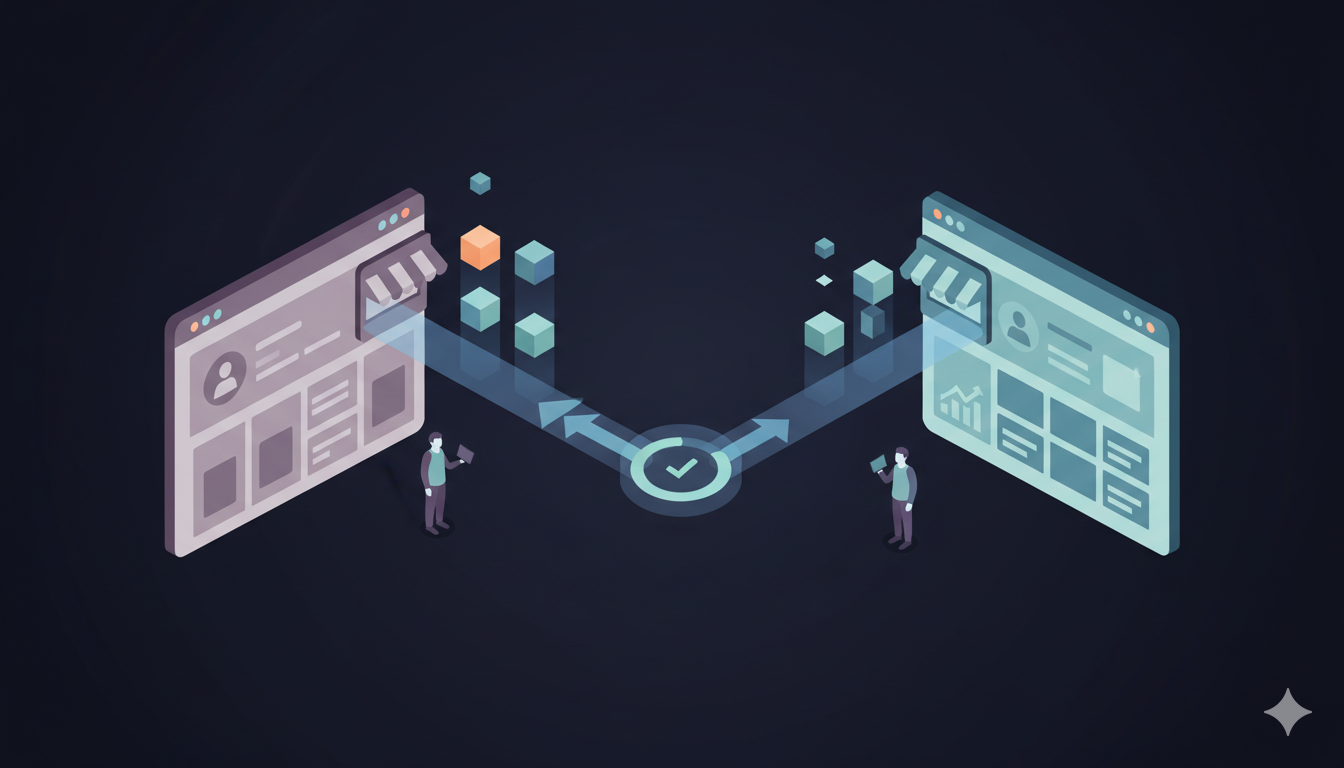
Re-platforming is one of the most significant milestones in an online merchant's journey. Whether you are moving from a hosted solution like Shopify or PrestaShop, or an open-source platform like Magento or WooCommerce, migrating to BigCommerce offers a powerful, SaaS eCommerce solution with unlimited products, Stencil themes, and headless API flexibility. This comprehensive guide covers everything you need to know to execute a seamless data migration to BigCommerce.
Table of Contents
- Why Migrate Your Store? Understanding the Basics
- Phase 1: Pre-Migration Planning & Preparation
- Phase 2: Choosing Your Migration Method
- Phase 3: The Big Migration Process (Step-by-Step)
- Phase 4: Post-Migration Checklist
- SEO Preservation Strategy
- Common Migration Pitfalls & How to Avoid Them
Why Migrate Your Store? Understanding the Basics
eCommerce migration is the process of transferring your store's data, design, and functionality from one platform to another. While the term "migration" sounds technical, it is essentially a business renovation. Just as a physical retail store might move to a larger location with better foot traffic, an online store migrates to improve scalability, reduce costs, or gain better control over the customer experience.
Signs You Have Outgrown Your Current Platform
Deciding to migrate is rarely a snap judgment. It usually stems from specific pain points:
- High Transaction Fees: Hosted platforms often charge percentage fees on every sale, eating into your margins.
- Limited Customization: You cannot modify the checkout flow or integrate specific tools without developer help.
- Complexity Issues: Your current platform requires technical knowledge for simple changes, making it hard to manage.
- Product Limitations: You need unlimited products or complex product variants that your current platform doesn't support.
- SEO Limitations: You lack control over URL structures, metadata, or sitemaps.
Moving to BigCommerce, a powerful SaaS eCommerce platform with unlimited products, Stencil themes, and headless API flexibility, solves many of these issues by giving you enterprise-grade features, no transaction fees on BigCommerce plans, and the flexibility to scale without artificial limits.
Phase 1: Pre-Migration Planning & Preparation
A successful migration is 80% preparation and 20% execution. Rushing into the transfer without a plan is the fastest way to lose data or tank your SEO rankings. Follow this checklist before you move a single byte of data.
1. Audit Your Current Store
Before you pack your bags, you need to know what you own. Perform a full content and data audit:
- Product Data: Check for duplicate SKUs, missing images, or outdated descriptions. Clean this data now so you don't migrate "garbage" to your new store.
- Customer Data: Verify that customer emails and addresses are formatted correctly.
- Apps & Integrations: List every app or integration you currently use (e.g., loyalty programs, email marketing). You will need to find BigCommerce app equivalents for these.
2. Prepare Your Target BigCommerce Store
You cannot migrate to a void. You need a functioning BigCommerce store ready to receive data.
- BigCommerce Account: Sign up for a BigCommerce trial or plan. BigCommerce is SaaS-hosted, so no server setup is required.
- Store Setup: Complete the initial BigCommerce store setup wizard.
- API Access: Generate API credentials in BigCommerce Admin (Settings > API Accounts) for migration tools.
- Migration App: Install the migration app on your BigCommerce store if using automated migration tools.
- URL Structure: Plan your URL structure. BigCommerce allows you to customize product and category URLs for SEO in the Admin.
3. Backup Everything
This is non-negotiable. Even with the safest migration tools, glitches can happen. Create a full backup of your Source Store's database and media files. Most platforms allow you to export CSV files of your catalog—do this as a safety net.
Phase 2: Choosing Your Migration Method
There are three primary ways to move data to BigCommerce. Understanding the pros and cons of each will highlight why automated solutions are the industry standard.
1. Manual Migration (CSV Import/Export)
This involves exporting data to CSV files from your old store and importing them into BigCommerce using BigCommerce's built-in import functionality in the Admin.
- Pros: Free and direct control over the data.
- Cons: Extremely prone to errors. Data structures rarely match (e.g., Shopify's CSV format is different from BigCommerce's). Images often fail to import, and password migration is impossible without proper tools. Complex product options may need manual mapping to BigCommerce's structure.
2. Hire a Developer
You can hire an agency to build a custom script using BigCommerce's REST API or Storefront API.
- Pros: Hands-off for you.
- Cons: Expensive (often thousands of dollars) and slow. While BigCommerce has robust API support, most work requires technical knowledge. It can take weeks to develop and test the script.
3. Automated Migration (Big Migration)
This method uses specialized software to connect your Source Cart and BigCommerce via API.
- Pros: Fast (hours, not weeks), affordable, and accurate. It preserves relationships between data (e.g., linking orders to the correct customer and products). Handles CSV formatting and image downloads automatically. Supports password migration with the migration app.
- Cons: Small cost involved, though significantly less than hiring a developer.
Phase 3: The Big Migration Process (Step-by-Step)
Using Big Migration simplifies the complex technical backend into a few user-friendly steps. Here is how the magic happens.
Step 1: Setup Source and Target Stores
First, tell us where you are coming from and where you are going.
- Source Cart: Select your current platform (e.g., Shopify, PrestaShop, Magento). You will need to provide the URL. Depending on the platform, you may need to install a "Connector Bridge" (a small file we provide) or provide an API Password.
- Target Cart: Select BigCommerce. Provide your BigCommerce store URL and API credentials. BigCommerce uses REST API for secure data transfer.
Step 2: Select Entities to Migrate
You have granular control over what gets transferred. You can choose "Select All" or pick specific entities:
- Products: Names, SKUs, Descriptions, Images, Prices, Stock levels, and product options.
- Product Categories: BigCommerce uses "Categories" terminology. Names, Descriptions, Images, URLs, and hierarchy.
- Customers: Names, Emails, Billing/Shipping Addresses. Note: Password migration is supported with the BigCommerce migration app.
- Orders: ID, Date, Status, Customer details, Product details, Total price.
- Coupons: Codes, Discounts, Usage limits.
- Reviews: Ratings, Usernames, Titles, Comments.
- Pages: Title, Content, Images, Tags, Authors.
Step 3: Advanced Mapping Options
This is where Big Migration stands out. You can map specific data fields to ensure they fit BigCommerce's structure.
- Order Status Mapping: Map "Awaiting Payment" in Shopify to "Pending" in BigCommerce.
- Category Mapping: Ensure your product categories become BigCommerce Categories correctly.
- Product Options: BigCommerce supports flexible product options. Complex variants from other platforms can be expanded into BigCommerce's option structure.
- 301 Redirects: Create redirects automatically to prevent 404 errors on your new site.
Step 4: Run Demo Migration
Never commit without testing. The Demo Migration transfers a limited number of entities (usually 10-20 products, customers, and orders) for free. This allows you to check the data on the new BigCommerce site. Verify images are visible, categories are structured correctly, and product options are displaying properly.
Step 5: Full Migration
Once satisfied with the demo, launch the Full Migration. The system runs in the cloud, so you can close your browser. Depending on the volume of data (e.g., 50,000 products vs 500), this can take anywhere from a few minutes to several hours. BigCommerce's infrastructure efficiently handles large catalogs.
Phase 4: Post-Migration Checklist
The progress bar says 100%, but you aren't finished yet. The post-migration phase is critical for configuration and testing.
1. Run "Recent Data Migration"
Since your old store remained live during the Full Migration, new orders or customers may have registered while the transfer was processing. Big Migration offers a Recent Data Migration service to fetch these new entities and add them to BigCommerce, ensuring no sales are left behind.
2. Design and Customization
Now that your products are in place, you can customize your BigCommerce store design. BigCommerce uses Stencil themes that you can modify. Check the storefront to ensure the layout handles your product images correctly (e.g., aspect ratios, galleries). BigCommerce's Admin makes it easy to adjust settings without coding.
3. Set Up Payment Gateways and Shipping
Payment credentials are highly sensitive and generally are not migrated for security reasons. You must manually configure:
- Payment Processors: PayPal, Stripe, Square, Authorize.Net, etc. BigCommerce has built-in support for many payment gateways via apps.
- Shipping Methods: Define where you ship and the rates (Flat rate, Free shipping, or Weight-based rates) in BigCommerce's shipping settings.
- Taxes: Configure tax rates via BigCommerce settings or use automated tax calculation apps if available in your region.
4. End-to-End Testing
Pretend you are a customer. Go through the entire purchasing funnel:
- Create a new account.
- Search for a product.
- Add to cart.
- Apply a coupon (check if migrated coupons work).
- Checkout and pay (use a sandbox/test mode).
- Check the email notification.
- Verify the order appears in the BigCommerce Admin.
SEO Preservation Strategy
The biggest fear merchants have regarding migration is losing Google rankings. If you move from mystore.com/products/blue-shirt to mystore.com/blue-shirt, Google treats that as a broken link unless you tell it otherwise.
The Power of 301 Redirects
A 301 redirect permanently tells search engines that a page has moved. Big Migration offers an option to "Create the 301 redirects on your target store" automatically. This ensures that old URLs redirect to the new BigCommerce URLs, preserving your "link juice" and domain authority. BigCommerce allows you to set up redirects in the Admin or via SEO apps.
Generate a New Sitemap
Once your new store is live, generate an XML Sitemap. BigCommerce has built-in sitemap generation functionality. You can access it at yourdomain.com/sitemap.xml and submit it to Google Search Console immediately. This prompts Google to crawl your new structure.
Common Migration Pitfalls & How to Avoid Them
1. Missing Images
Problem: Product thumbnails appear as broken icons.
Cause: Usually caused by hotlink protection on the Source Store or the Source Store being in "Maintenance Mode" during migration.
Solution: Ensure the Source Store is publicly accessible (even if password protected, provide credentials) and disable hotlink protection on your server. Big Migration downloads images to BigCommerce's media system.
2. Password Migration Issues
Problem: Customers cannot log in to the new store.
Cause: BigCommerce supports password migration with the migration app, but it requires proper configuration.
Solution: Ensure the migration app is installed and password migration option is enabled. Big Migration handles password migration when the app is properly configured.
3. Product Option Complexity
Problem: A T-shirt with Size (S, M, L) and Color (Red, Blue) displays incorrectly.
Cause: Different platforms handle product variants differently. BigCommerce uses product options and modifiers.
Solution: BigCommerce supports flexible product options. The migration tool maps variants to BigCommerce's option system. Verify the mapping in the demo migration before running the full migration.
4. API and Performance Issues
Problem: Migration fails or times out.
Cause: BigCommerce uses REST API. Large catalogs may require rate limit handling or batch processing.
Solution: Ensure your migration tool handles BigCommerce API rate limits. For large catalogs, automated migration tools handle this automatically with throttling and retries.
Final Thoughts
Migrating to BigCommerce is a strategic investment in the future of your business. It unlocks a SaaS platform with unlimited products, Stencil themes, headless API, and enterprise-grade features. While the process involves many moving parts, it doesn't have to be overwhelming.
By using Big Migration, you transform a risky, months-long coding project into a secure, automated process that takes just a few hours. We handle the heavy lifting of data translation so you can focus on what matters: relaunching your brand and welcoming your customers to a better shopping experience.
Ready to make the switch? Start your Free Demo Migration today and see how your store looks on BigCommerce.